|
The Holden Beach Turtle Watch Program conducts weekly educational programs on selected Wednesday evenings in June, July and August. Please check the NEWS section of this website for details on dates, times and locations. Seating is limited. |
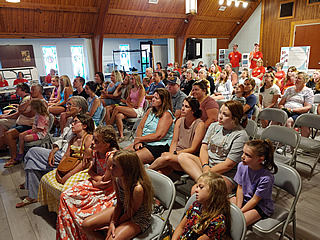 |
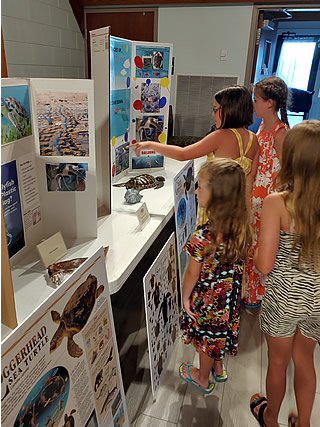
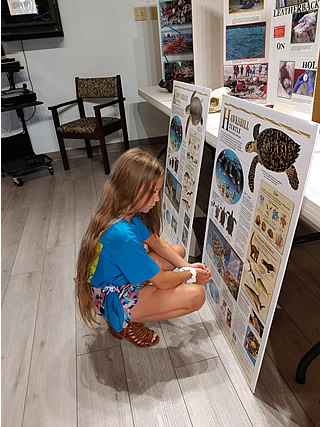
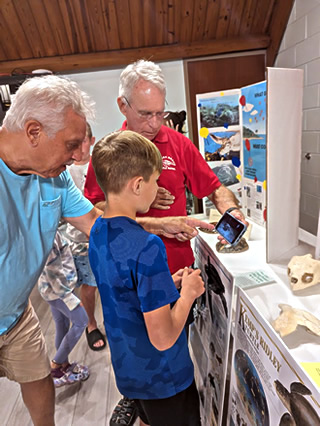
The Turtle Talk program focuses on the life cycle of the sea turtle, and how the Holden Beach Turtle Watch Program aids in the preservation of sea turtles. A short video presentation will be shown with a question and answer segment to follow. Several turtle artifacts will be on display for viewing and informational handouts are available.

|
| |
Turtle Talk is open to all family members and is enjoyed by people of all ages. There is no admission charge but donations are greatly appreciated. Support for the Holden Beach Turtle Watch Program comes solely from donations and the proceeds from the sale of our annual Turtle Patrol T-shirts.
This year’s Holden Beach Turtle Watch Program shirts are available before and after the Wednesday Turtle Talk programs (cash or personal checks accepted) and at Lighthouse Gifts located on the causeway (look for the green awning with pink dots and the pink “Turtle Watch Shirts Here” sign).
|
|
Special programs for younger turtle enthusiasts are held Wednesday afternoons in June, July and August on select dates.
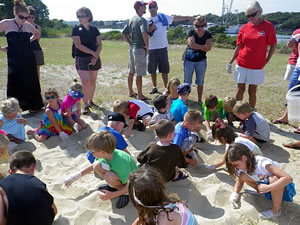
These programs will feature age appropriate crafts, stories and activities for children ages 3 to 6 years old. The children will be divided into two groups: ages 3 & 4 and 5 & 6. Each group will learn about the sea turtles that nest on Holden Beach. The younger group will make a turtle craft and the older group will be searching for turtle eggs in the sand.
All children must be accompanied by a parent or guardian. This program is free of charge. Check the NEWS section of this website for details on dates, times and locations.
|
|
LOGGERHEAD
SEA TURTLE
(Caretta caretta) |
Large thick head;
broad, short neck |
| WEIGHT & SIZE |
200-400 pounds |
| FAVORITE FOODS |
jellyfish, crabs, shrimp |
| LIFESPAN |
up to 100 years |
| NEST SIZE |
100 or more eggs |
| NESTING SEASON |
May to August |
| HATCHING |
Occurs from 55 to 89 days from the date laid |
| THREATS |
pollution, poaching, fishing, and habitat loss |
|
more facts...
- Sea Turtles predate dinosaurs and have existed for over 200 million years.
- Sea Turtles have lived to be over 100 years old in captivity.
- Sea Turtles love to eat jelly fish, sponges, algae, sea grasses and crustaceans.
- Bright house lights that face the ocean will confuse nesting mothers and hatchlings.
- The population of Sea Turtles is threatened by pollution, poaching, and habitat loss.
- There are 8 species of Sea Turtles. 5 visit North Carolina: The Loggerhead, Hawksbill,
Kemp's Ridley, Green and Leatherback.
- The majority of the nests on Holden Beach are laid by Loggerhead Sea Turtles.
- A Fine of up to $100,000 and or 1 year in prison is the penalty for harassing a sea turtle or disturbing its nest.
- The temperature of the sand determines the sex of the hatchlings (the hotter the sand, the more females develop and cooler sand results in more males).
- The average weight of a mature Loggerhead Turtle is 250 to 400 pounds.
- Our riders average over 2400 miles a year in routine beach patrols.
|
|
|
|